

Things That Are True
But Most People Don't Realize

One of the great joys of growing older is discovering how often reality differs from what we assume.
Sometimes it’s because of marketing. Or maybe it’s movies, photographs, or stories we’ve heard all our lives. And sometimes it’s simply because the world is more interesting and surprising than we think.
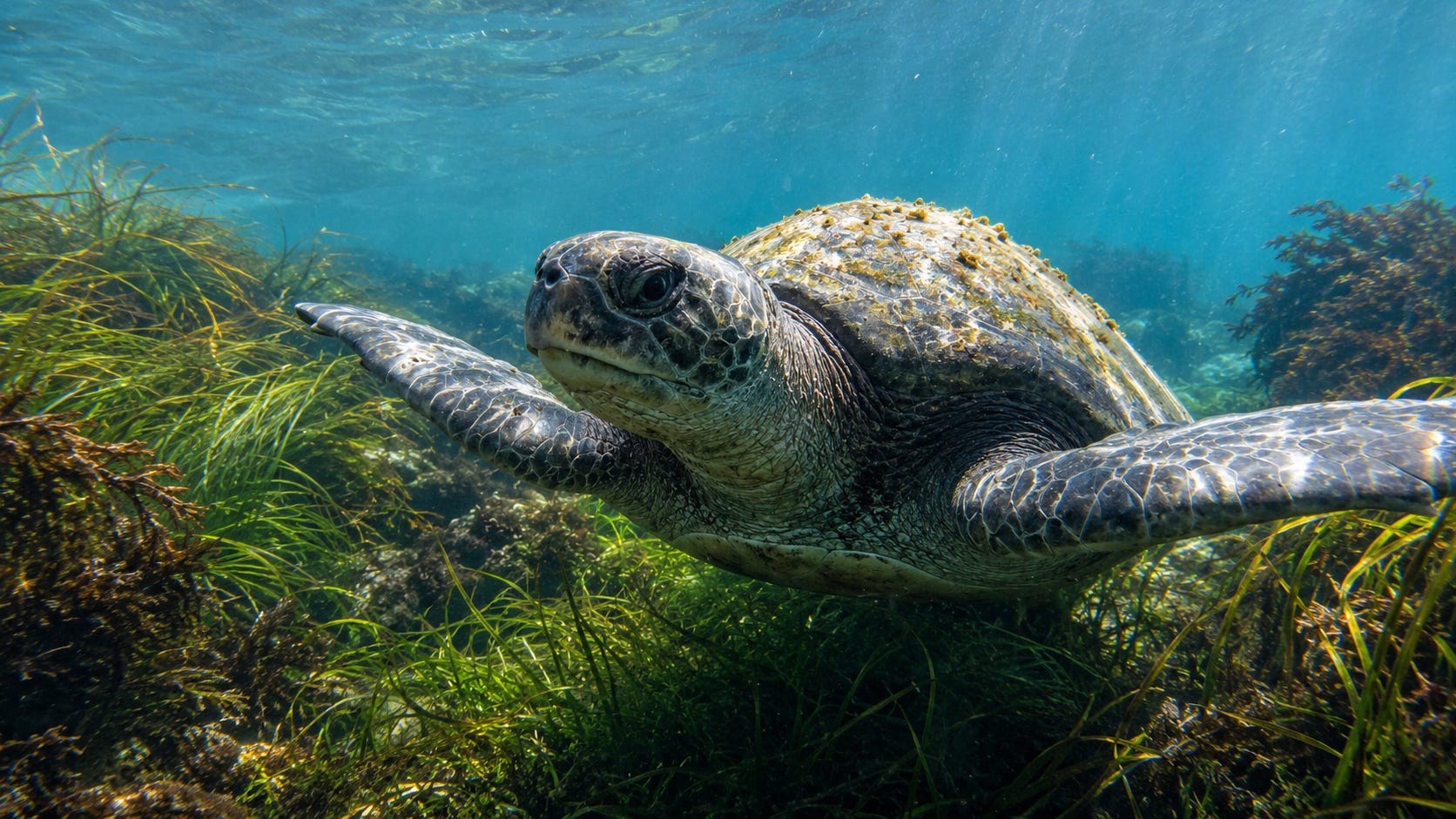
For example, many kayak tours promise the chance to spot sea turtles. Yet unless a turtle surfaces near your kayak, you’re unlikely to see one at all. They’re usually underwater, and the glare on the water makes them nearly invisible from above. Therefore, I suggest snorkeling where sea turtles have been spotted by skin divers.
[Note re: photo: From a kayak above the water, Mark and I probably would never have seen this turtle. Only by going underwater with a camera could we capture what was hidden beneath the surface.]
Or consider airplane food. It isn’t always the chef’s fault if your meal tastes bland. At cruising altitude, the dry air and cabin pressure actually dull your senses of taste and smell. Food really does lose some of its flavor at 35,000 feet.
Photographs offer another lesson in perception versus reality. A waterfall may appear larger and more dramatic in a photograph because of camera angles, lenses, and framing. Yet some of the most breathtaking places on Earth seem disappointingly ordinary in pictures. Vast landscapes, sweeping mountain ranges, the Grand Canyon, Niagara Falls, a sunset over the ocean, or the view from a mountaintop often lose much of their grandeur when reduced to a flat image.
A camera struggles to capture scale, depth, movement, sound, wind, temperature, and the feeling of standing in a place. That’s why people so often say, “The photos don’t do it justice.”
The world is full of these little truths. Some are scientific. Some are historical. Some reveal how our minds work. Others expose the gap between perception and reality.
I’ve gathered a collection of facts, observations, and curious realities that are true, yet often overlooked. Once you know them, you’ll never look at the world in quite the same way again.
Nature & Travel
You are unlikely to see sea turtles from a kayak unless they surface. Sea turtles spend much of their time underwater, and the glare on the water often prevents seeing them from above.
Most whales seen on whale-watching trips are visible for only a tiny fraction of their lives. You’re usually seeing a brief surfacing event from an animal that spends most of its time underwater.
Wild animals generally do not want to meet you. Most wildlife viewing experiences involve animals tolerating humans rather than interacting with them.
Many waterfalls look much larger in photographs than in person. Wide-angle lenses and framing can exaggerate scale.
The “pristine wilderness” in many national parks was inhabited by Indigenous people for thousands of years. (And lately, we are not nearly the kind of stewards they were.)
You can spend days in a forest and never see most of the animals living there. Many mammals are nocturnal, hidden, or actively avoiding humans.
Most people have never seen a truly dark night sky. Light pollution has become so widespread that billions of people can no longer see the Milky Way from where they live.
Food & Restaurants
Most truffle oil contains no truffles. Many versions use synthetic flavor compounds.
A “fresh baked” smell in a store may come from a scent machine rather than baking.
Many restaurant desserts are purchased frozen and thawed.
Brown eggs are not more nutritious than white eggs.
Lobster was once considered poor people’s food in parts of North America.
Health & Fitness
Sweating does not mean you’re burning more fat. It mainly reflects temperature regulation and water loss.
You can gain weight while becoming healthier. Muscle is denser than fat.
Many people who appear fit cannot run very far. Fitness is highly specific to the activity.
Stretching before exercise does not necessarily prevent injury.
Transportation
Most airplane flights spend only a few minutes at their highest altitude.
Cruise ships are often traveling surprisingly slowly. The sensation of speed is muted on water.
Photography & Film
Most “sunset” photos are heavily influenced by camera settings and editing.
A mountain in a photograph can look enormous while being miles away. (Same thing with the Luxor in Las Vegas.)
Movie rain is often difficult to see unless it is heavily backlit.
Many “candid” social media photos are carefully staged.
Business & Marketing
Many products labeled “limited edition” are only limited because the company decided to stop making them.
Most loyalty programs are designed to increase spending, not save customers money.
“Sale prices” are often compared to a manufacturer’s suggested retail price that few people actually paid.
Many tourist attractions are famous because they are marketed well, not because they are the most impressive examples of their kind.
Human Behavior
Most people remember the highlights and lowlights of an experience, not the middle.
People routinely overestimate how much others are paying attention to them.
Eyewitness memory is much less reliable than most people think.
Confidence and expertise are not the same thing.
Mountain Biking
The fastest rider on a descent is often not the strongest rider.
Expensive bikes do not automatically make riders faster.
Most improvement comes from technique, not equipment.
Professional riders make difficult trails look easier than they actually are.
The rider who appears fearless is often simply better at risk assessment.
Video Production
A video can look expensive because of lighting, not because of the camera.
Many viewers cannot tell the difference between a $2,000 camera and a $20,000 camera.
Good audio often matters more than perfect video.
Most people notice bad sound before they notice imperfect images.